# Fabula (/docs/fabula)
Fabula is a story workspace. You describe a story once, as structured pieces, then
generate a script from those pieces. The plan is the source of truth, so a
regeneration with a different model keeps the same cast and the same world.
Open **Fabula** in the sidebar (or `/fabula`).
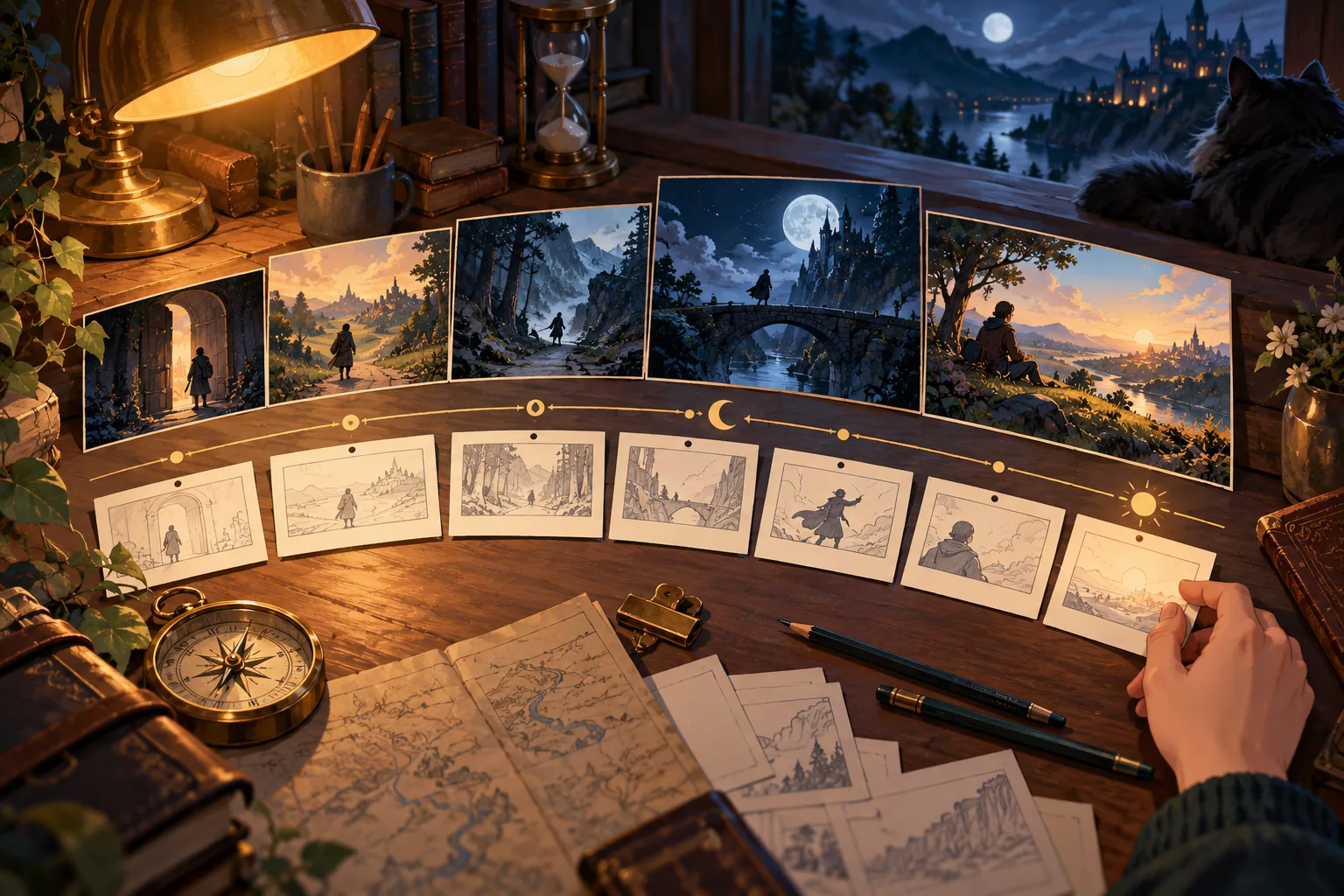
Fabula turns a plan into a script.
## The plan [#the-plan]
A Fabula plan has six parts. Each part is separate, so you can change one without
rewriting the others.
| Part | What it holds |
| --- | --- |
| Story | Title, logline, theme, and the scene instructions |
| Structure | The shape of the plot and the number of beats |
| Cast | Characters with a role, an archetype, goals, flaws, and an arc |
| Relationships | Who trusts whom, who wants what, and what is unresolved |
| World | Questions and answers about setting, culture, magic, technology, history, politics, rules, and constraints |
| Devices | Suspense and surprise elements that push a scene forward |
An **audience goal** is a wish for the reader, for example "make the middle act
tense". Each goal carries a priority: high, medium, or low.
The cast carries the roles, goals, flaws, and arcs.
## Structure and beats [#structure-and-beats]
Pick one of six structures:
- **Three-Act Structure.** Setup, confrontation, resolution.
- **Five-Act Structure.** A longer escalation with a clear midpoint.
- **The Hero's Journey.** Departure, initiation, return.
- **Save the Cat.** Fifteen beats from the opening image to the final image.
- **Kishōtenketsu.** Introduction, development, twist, conclusion. No conflict
required.
- **Freytag's Pyramid.** Rise to a climax, then a falling action.
- **Custom.** You name the shape and write the beat labels yourself.
The beat count runs from **1 to 60**. The default is 20. A structure provides the
named beats; the count decides how many rows the script will fill.
Beats are the skeleton the script is written against.
## Generate a script [#generate-a-script]
1. Fill the plan. A title and at least a logline make the first run useful.
2. Pick a model. The picker shows the models the owner enabled.
3. Press **Generate**. The script streams into the workspace as it is written.
4. The run is saved as a revision, so the previous version stays available.
Each generation shows a price before it runs and spends credits from your balance.
A failed run is charged, as every generation is, and an admin reviews it. See
[Credits and plans](/docs/credits).
The script arrives in beats, in the voice of the cast.
## Revisions and export [#revisions-and-export]
Every finished run is kept as a revision with its model and its timestamp. You can
open an older revision, compare it with the current script, and continue from it.
Export options:
- **Script text.** The latest script as a plain text file.
- **RPG Maker MV/MZ event JSON.** The plan and the script as an event list you can
import into an RPG Maker project.
- **Full export.** The plan, the beats, and every revision in one file.
## Limits [#limits]
| Input | Limit |
| --- | --- |
| Beat count | 60 |
| Beat label | 64 characters |
| Scene instructions | 50,000 characters |
| A story plan field | 50,000 characters |
| Title | 200 characters |
A draft is saved in your browser as you type, so a reload does not lose the plan.
A saved session lives on your account.